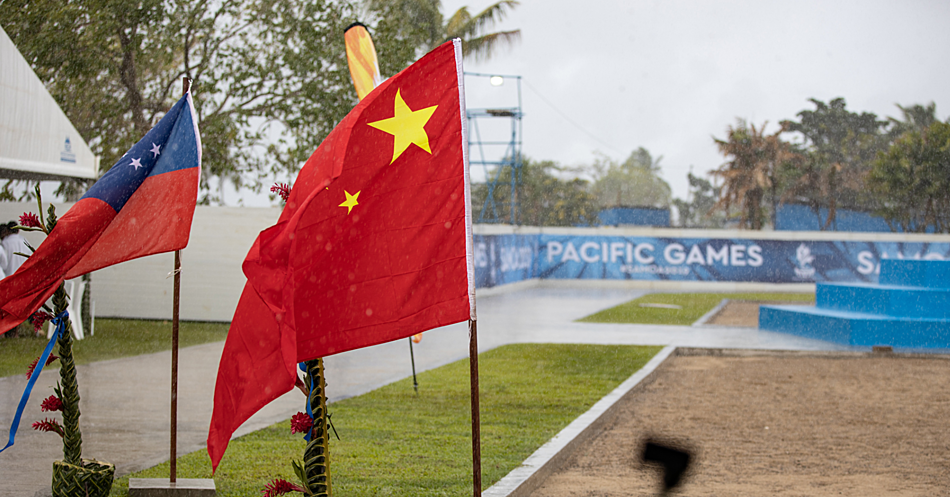
General China News: The Elusive "China Stipendien Samoa" in Mainstream Media
In today's interconnected world, individuals and nations alike are constantly seeking opportunities for growth, collaboration, and knowledge exchange. For many aspiring students and professionals from Pacific Island nations like Samoa, pursuing higher education abroad represents a significant pathway to personal and national development. Consequently, a search for terms like "china stipendien samoa" — or "China scholarships Samoa" — is a natural query for those looking to leverage educational opportunities offered by the People's Republic of China.
However, an interesting observation arises when one delves into the coverage provided by major international news outlets. Our investigation, drawing from prominent sources such as The Guardian, CNN, and AP News, reveals a consistent trend: while these platforms offer extensive coverage of general China news – ranging from geopolitical developments, economic shifts, human rights issues, and broader international relations – specific details pertaining to "china stipendien samoa" are conspicuously absent. This article will explore why this might be the case, where individuals can realistically find such information, and provide a broader context of China's educational diplomacy with Samoa and the wider Pacific region.
The Absence of Specific Bilateral Scholarship News
The primary role of major news organizations is to report on events and trends that have significant impact, broad appeal, or represent breaking developments on a global scale. When reviewing the content from leading media houses, it becomes clear that their focus on China typically revolves around high-level political interactions, economic policy announcements, major environmental initiatives, or significant social transformations within the country. Topics that fall into the category of niche, bilateral educational agreements, while immensely important to the individuals and countries involved, generally do not meet the criteria for top-tier international news coverage.
For instance, an article from CNN might detail China's latest trade figures, or The Guardian could run a piece on China's role in global climate change initiatives. AP News might report on a specific geopolitical stance taken by Beijing concerning a regional conflict. These are stories designed for a mass audience, providing updates on global power dynamics and their implications. A specific scholarship program for students from a particular country, even if part of a larger diplomatic effort, is often considered too granular for the daily headlines of these broad-spectrum news providers. This absence, therefore, doesn't imply a lack of such programs, but rather reflects the editorial priorities of global news giants.
Navigating the Information Gap: Where to Look Beyond Major Headlines
Given that mainstream media isn't the primary conduit for information on "china stipendien samoa," where should aspiring scholars and interested parties direct their search? The answer lies in shifting focus from general news to official, specialized, and governmental sources. These platforms, while perhaps less frequently updated or engaging than news sites, are the authoritative repositories for such specific details.
Practical Tips for Finding China-Samoa Scholarship Information:
- Official Embassy Websites: The most direct and reliable source is typically the Embassy of the People's Republic of China in Samoa, or conversely, the Samoan Embassy in Beijing. These diplomatic missions are responsible for facilitating bilateral exchanges, including educational programs. Their websites will often host dedicated sections on scholarships, cultural exchanges, and application procedures.
- Ministry of Education Platforms: The Ministry of Education, Sports and Culture in Samoa, and China's Ministry of Education (MOE) along with the China Scholarship Council (CSC), are central to managing international student programs. The CSC is the primary body administering Chinese Government Scholarships (CGS), many of which are open to students from developing countries, including Samoa.
- University International Offices: Many Chinese universities have well-developed international student offices that offer scholarships directly. Prospective students can visit the English-language websites of Chinese universities known for their international programs (e.g., Peking University, Tsinghua University, Fudan University, Zhejiang University) and look for their international admissions or scholarship pages.
- Bilateral Agreements and Cultural Exchange Programs: Occasionally, scholarship opportunities arise from specific bilateral agreements signed between the governments of China and Samoa. These might be announced through official government gazettes or state media, which can then be found via targeted searches.
- Educational Consultancies (with caution): While some reputable educational consultancies specialize in facilitating placements for international students in China, it's crucial to exercise due diligence. Verify their credentials and ensure they are accredited or officially recognized.
For more detailed insights into why major news outlets might overlook these specific scholarship programs, you might find China-Samoa Scholarships: Absence in Top News Outlets to be a helpful read. These targeted resources are far more likely to yield precise and actionable information than general news feeds.
Broader Context: China-Samoa Relations and Educational Diplomacy
While specific scholarship announcements may not make global headlines, China's engagement with Samoa and other Pacific Island nations is a significant aspect of its foreign policy. This engagement encompasses economic aid, infrastructure development, trade, and increasingly, cultural and educational exchanges. Educational diplomacy plays a crucial role in fostering goodwill, building long-term relationships, and enhancing China's soft power globally.
China's "Belt and Road Initiative" (BRI), for example, includes a strong component of people-to-people connectivity, which often translates into increased scholarship opportunities for students from participating countries. Samoa, like many other nations in the Pacific, has benefited from Chinese development assistance and has growing ties with Beijing. Within this broader framework, the provision of scholarships, or "stipendien," is a consistent feature, even if individual scholarship programs are not subject to daily news reporting.
The Strategic Importance of Educational Exchanges
For China, offering scholarships to students from countries like Samoa is a multi-faceted strategy. It helps cultivate a future generation of leaders, professionals, and academics who have firsthand experience with Chinese culture, language, and education system. This can lead to stronger bilateral ties, greater understanding, and smoother cooperation in various sectors down the line. It's an investment in human capital and international relationships.
For Samoan students, these scholarships represent invaluable opportunities. They gain access to diverse academic fields, cutting-edge research, and a global perspective that might be challenging to obtain otherwise. Studying in China not only enhances their academic and professional profiles but also provides a unique cultural immersion, fostering personal growth and cross-cultural understanding. These graduates often return to Samoa equipped with new skills and knowledge, contributing to their nation's development in fields ranging from engineering and medicine to business and public administration.
Prospective scholars from Samoa should therefore understand that even if "china stipendien samoa" isn't a headline item, the opportunities are real and part of a larger, ongoing diplomatic and educational strategy. The key is knowing where to look and how to prepare. For more insights into the challenges and strategies for uncovering these opportunities, explore Searching China Stipendien Samoa: Uncovered by Major Media.
Practical Advice for Aspiring Samoan Scholars
- Start Early: Scholarship application processes can be lengthy and competitive. Begin your research well in advance of desired enrollment dates.
- Understand Eligibility: Each scholarship program will have specific criteria related to age, academic background, language proficiency (Mandarin HSK levels or English proficiency for English-taught programs), and sometimes even specific fields of study.
- Prepare Documentation: Typically, you will need academic transcripts, recommendation letters, a study plan or research proposal, a physical examination form, and often a police clearance. Ensure all documents are translated into English or Chinese and notarized if required.
- Master the Application Process: Most Chinese Government Scholarships are applied for through the CSC online portal, often with an initial application to the Chinese Embassy in Samoa or directly to a university. Follow instructions meticulously.
- Consider Language Learning: While some programs are English-taught, learning basic Mandarin will significantly enhance your experience and can even be a requirement for certain scholarships.
Conclusion
The quest for "china stipendien samoa" is a testament to the growing educational aspirations within Samoa and the broader engagement between China and Pacific Island nations. While major international news outlets focus on broader geopolitical and economic narratives, leaving specific bilateral scholarship details out of their daily reporting, this should not deter prospective students. The absence of specific scholarship news in The Guardian, CNN, or AP News is a reflection of journalistic scope, not an indicator of the non-existence of opportunities.
By shifting focus to official embassy websites, governmental education councils, and university international offices, aspiring scholars can uncover a wealth of information and tangible opportunities. China's commitment to educational diplomacy and human resource development for its partners remains strong, and Samoan students are well-positioned to benefit from these initiatives. Proactive research, meticulous preparation, and an understanding of the available official channels are the true keys to unlocking these valuable educational pathways.